
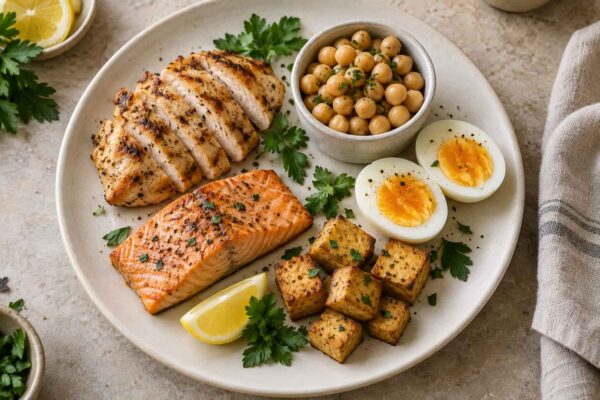
Protein has become the celebrity of the nutrition world. We’re adding it to coffee, buying protein chips, and apparently asking cottage cheese to carry the entire wellness industry on its back. While protein absolutely deserves a place on your plate, there’s something missing from a lot of these conversations: protein still has calories. Eating more of it doesn’t automatically mean better results, and eating nutritious food doesn’t guarantee that you’re eating the right amount for your body.
I learned this firsthand when I was eating around 130 grams of protein every day, aiming for close to one gram per pound of body weight. I was working out hard, lifting heavy, and doing what I thought I was supposed to do. I was also miserable. I felt like I was force-feeding myself just to hit a number, and, surprisingly, I was gaining weight. That doesn’t prove protein caused the weight gain, since total calories, muscle, and water changes can all affect the scale. But it did make me question whether the routine I was following actually made sense for me.
When I lowered my protein intake closer to 0.6 grams per pound of body weight and eased up on my workouts, I felt so much better. I’m sleeping better, too. These days, I do some simple weight movements a few days a week and get my steps in every single day. Because I changed both my food intake and my exercise routine, I can’t say that reducing protein alone caused those improvements. I can say that my current routine feels better and is much easier to maintain. I’m no longer treating dinner like a competitive sport.
Protein Is Important, but More Isn’t Always Better
Your body needs protein to maintain muscle, repair tissues, and make enzymes and other essential substances. Getting enough matters, especially when you’re active. But there is a big difference between meeting your needs and assuming the highest number must be the best number. Every woman has a different body, activity level, health history, and set of goals. Why would we expect all of us to thrive on the same prescription?
For many active adults, approximately 0.6 to 0.9 grams of protein per pound of body weight per day can be a reasonable starting range. That’s roughly 1.3 to 2.0 grams per kilogram, broadly consistent with sports nutrition guidance for active adults. It isn’t a universal requirement, and the upper end isn’t something every woman needs to reach. Your age, training, and health circumstances influence your needs, and calculating protein from current body weight isn’t appropriate for everyone. American College of Sports Medicine
For someone weighing 130 pounds, that range would be about 78 to 117 grams per day. Eating 130 grams isn’t automatically harmful or excessive, but it may be more than that person needs to meet their goals. For me, chasing the higher target made eating uncomfortable. Someone else might feel great at that amount. The point is to find an appropriate intake you can comfortably maintain, while leaving room for the other foods your body needs.
Healthy Food Still Counts Toward Your Total Intake
Protein provides about four calories per gram, so 130 grams contributes approximately 520 calories from protein alone. That doesn’t include any fat or carbohydrates in the foods supplying it. A protein shake, a chicken dinner, and a bowl of Greek yogurt all contribute to your daily energy intake. Their nutritional benefits don’t erase their calories.
The same goes for avocado, nuts, olive oil, and all the other foods we tend to label “healthy.” These foods can be valuable parts of your diet, but portions still matter. A generous pour of olive oil and several spoonfuls of almond butter can contribute more energy than you realize. Unfortunately, eating almond butter directly from the jar doesn’t qualify as a calorie-free activity, even if you’re standing up.
Food quality and food quantity both matter. If you consistently consume more energy than your body uses, you can gain weight, even when your food choices are nutritious. That’s a calorie surplus, and it can work against a fat-loss goal. It doesn’t mean you’ve failed or that those foods are bad. It means your intake may need adjusting to match your needs. A surplus can also be appropriate when intentional weight gain is the goal, so the right approach depends on what you’re trying to accomplish.
Understand Your Energy Needs Before Chasing Another Number
Calories are a measure of energy, and your body uses energy all day long. Breathing, digesting food, walking around the house, and exercising all contribute to your total daily energy expenditure. Your workout is only one part of that total. Understanding your approximate needs can help you make more informed choices about how much to eat, instead of assuming that working out hard gives you unlimited room for extra food.
If you want to maintain your weight, your intake needs to roughly match your expenditure over time. If your goal is fat loss, a modest, sustainable calorie deficit is generally needed. A tool such as the NIH Body Weight Planner can help adults estimate a starting point for weight management, but no calculator or fitness watch can give you a perfectly exact number. Your needs can change, so pay attention to trends over several weeks, along with your hunger, energy, recovery, and overall well-being.
This also doesn’t mean eating as little as possible. Under-fueling can leave you feeling lousy, and cutting more food isn’t always the answer. The goal is to eat enough to support your body while keeping your intake aligned with what you want to achieve. That requires a little awareness, which brings me to one of the most useful experiments you can try.
Write Down What You Actually Eat
Document everything you eat and drink for a few typical days. Include your meals, snacks, beverages, cooking oils, dressings, and the bites you grab while making dinner. Try to include a weekend day, too, if your weekends look different from your weekdays. Don’t change your eating to make the record look impressive. You’re gathering information about your real habits, and that information is much more useful when it’s honest.
During those few days, measure portions when practical. You might be surprised by how different your usual serving looks compared with the amount you thought you were eating. That works both ways. Some people discover they’re eating more than they realized, while others find they aren’t eating enough. You might also notice that you’re adding food when you’re already full just to reach a protein target, or that your meals are missing variety because you’ve become so focused on one nutrient.
Use what you learn to make a manageable adjustment. Maybe you need more substantial meals, a little less dressing, or a protein target that leaves you comfortable instead of stuffed. A few days of tracking won’t tell you everything, and it doesn’t have to become a permanent habit. It’s a chance to replace some guesswork with information. If tracking makes you anxious or obsessive, working with a registered dietitian or nutritionist on a gentler approach may be more helpful.
Get yourself a food scale to help train your brain quantities. If you don’t already have a scale, this is the one I use and it’s been great.
Find What Works for Your Body
We’re all bio-individual, meaning our needs and responses vary. That doesn’t mean the basics of nutrition stop applying. It means those basics need to be adapted to the person. Your age, health, daily movement, training, and preferences all matter. A routine that feels wonderful for your friend may leave you exhausted, uncomfortable, or constantly thinking about your next meal.
I like using myself as a guinea pig because trying things and paying attention helps me understand my own needs. My experience doesn’t prove that everyone should eat less protein or change their workouts. It reminds me to question advice that sounds universal and notice whether what I’m doing is actually helping. For me, a more moderate protein intake, simple strength movements, and daily steps feel much better than the routine I was forcing before.
Protein deserves a place on your plate, but it doesn’t need to run your life. Choose nutritious foods, get familiar with your portions, and give yourself permission to adjust when something isn’t working. You don’t earn extra health points for choking down another chicken breast when you’re already full. The goal is a way of eating and moving that supports your health and feels good enough to keep doing.