
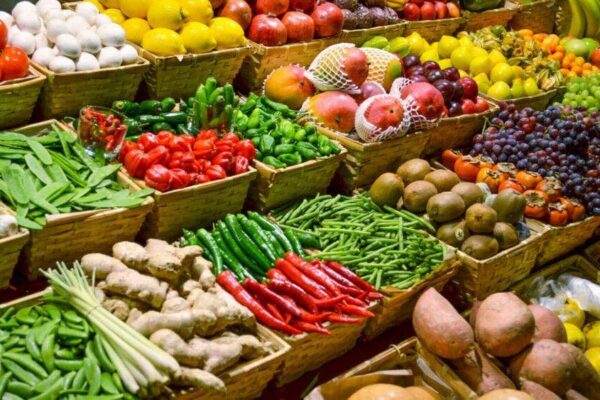
Confused about what to buy organic and what you can confidently grab off the shelf without the organic label? You’re not alone and honestly, this is one of the biggest pain points I hear from women trying to clean up their lifestyle without overcomplicating their grocery routine. The good news is, you don’t need to overhaul your entire cart or double your grocery bill to make meaningful changes. You just need a little clarity.
Let’s simplify this.
When it comes to produce, not all fruits and vegetables are created equal in terms of pesticide exposure. Some are heavily sprayed and more absorbent, while others have natural protective layers that make them less vulnerable. That’s where the concept of the “Dirty Dozen” and the “Clean Fifteen” comes in. Think of it less like a strict rulebook and more like a smart shopping guide, one that helps you prioritize where organic actually matters most.
The Dirty Dozen refers to produce that consistently shows the highest levels of pesticide residue, even after washing. These tend to be items with thinner skins or more delicate surfaces, which means chemicals can cling to them more easily or even seep into the fruit or vegetable itself. If there’s anywhere to invest in organic, it’s here. Strawberries, spinach, kale, grapes, peaches, pears, nectarines, apples, bell peppers, cherries, blueberries, and green beans all fall into this category. And when you think about it, many of these are foods we eat often and in larger quantities within our smoothies, salads, snacks which makes the exposure more consistent over time.
On the flip side, the Clean Fifteen includes produce that tends to have the lowest levels of pesticide residue. These are your “no stress” options, the ones you can buy conventional without feeling like you’re compromising your health. Avocados, sweet corn, pineapple, onions, papaya, frozen sweet peas, asparagus, honeydew melon, kiwi, cabbage, mushrooms, mangoes, sweet potatoes, watermelon, and carrots all make this list. Many of these have thicker skins or outer layers that act as a natural barrier, meaning what you’re actually eating is far more protected.
Now, this is where I want you to take a breath, because this part matters. This is not about fear. This is not about perfection. And this is definitely not about making you feel like you’re doing it wrong if your cart doesn’t look a certain way. This is about awareness. Because once you know where it matters most, you can make decisions that actually move the needle without adding more stress to your life. You don’t need to buy everything organic. You don’t need to spend hours analyzing every label. You just need a strategy that works in real life.
From a health perspective, reducing your exposure to pesticides over time can support your body in ways you might not immediately see but will absolutely feel. We’re talking about supporting your hormones, reducing your overall toxic load, and giving your body one less thing to constantly process and detox. Especially for women who are already dealing with stress, energy dips, or hormone imbalances, these small changes can add up in a meaningful way.
A simple way to apply this without overthinking it is to start with the foods you eat the most. If strawberries, spinach, and apples are in your weekly rotation, focus on buying those organic first. If avocados, onions, and sweet potatoes are staples, feel confident buying those conventional. This is how you build sustainable habits by making small, intentional upgrades that fit into your life instead of trying to flip everything overnight.
One more point to add is that organic or not, I still wash my fruits and vegetables before consuming. This helps eliminate dirt, bacteria or any other exposures that you wouldn’t want to consume. It’s just good practice to wash them – I fill a bowl with water and add ACV and baking soda to create a fizz and give my fruits and veggies a nice dunk.
At the end of the day, this is really about becoming a more informed consumer without losing your sanity in the process. You’re allowed to keep this simple. You’re allowed to make progress without perfection. And you’re allowed to build a version of clean living that feels good, not restrictive.
Because the goal here isn’t to create stress around food. It’s to create confidence.
And once you have that, everything else starts to feel a whole lot easier.
You can read more on the official EWG.org article here. Be aware of the health risks associated with a high consumption of pesticides and other forever chemicals found on non-organic fruits.
Also, there are supplements that support our body’s detox pathways. Here are two products that I take daily to help my cellular health and detox systems. If you use the links below, you will get 20% off your order (or use code: INGREDIENTGAL).
Phospholipid Complex (or PC) is the golden syrup! It supports lipid bilayer integrity (our cells are made up of 50-60% lipids). This helps our mitochondrial function, our cognitive performance, and liver detoxification pathways. Basically, this is food for every cell in your body. We all need liver detox support given the level of toxins we are all naturally and so easily exposed to in today’s world, such as heavy metals, mold, phthalates, pesticides, microplastics, and VOCs.
Evening Primrose Oil is extracted from the seeds of evening primrose which contains gamma-linolenic acid (GLA), an omega-6 fatty acid that has both anti-inflammatory and pain-relieving properties. EPO supports hormonal balance during perimenopause, during menstrual cycles and during menopause. It also supports the body’s response to inflammation, nourishes skin hydration and overall skin vitality. Lastly, it contributes to mood balance and cognitive function.