
Part 2
One of the biggest misconceptions I see in this conversation is the assumption that eating less automatically means becoming healthier. It doesn’t. GLP-1 medications work, in large part, by suppressing appetite, and for someone living with severe obesity who has spent years battling excessive hunger despite making meaningful lifestyle changes, that can be incredibly beneficial. Reducing an overwhelming appetite may finally create the space to build healthier habits, lose weight, improve blood sugar, and reduce the risk of chronic disease. That’s exactly where I believe these medications can have an extraordinary impact. But appetite suppression and health improvement are not the same thing, and I think we’ve started to blur that line.
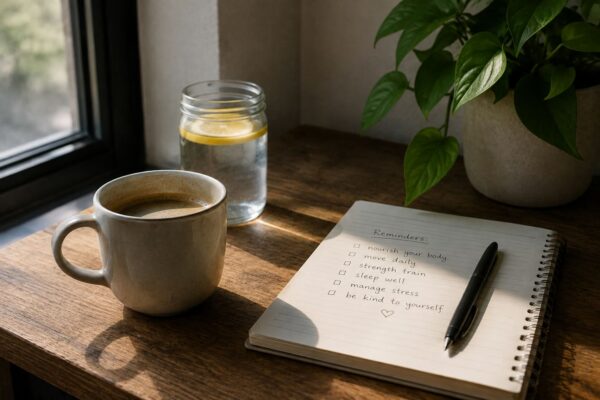
If someone loses weight but continues eating a nutritionally poor diet, doesn’t consume enough protein, loses a significant amount of muscle, never develops healthier habits, and remains disconnected from the reasons they gained weight in the first place, have we truly solved the problem? We’ve certainly changed the number on the scale, but health is measured by much more than body weight. It’s reflected in strength, energy, metabolic function, mobility, resilience, and the ability to sustain healthy behaviors over a lifetime. This is why I believe education should be an integral part of GLP-1 treatment. People should understand how to build meals that provide adequate protein and fiber, why resistance training matters for preserving muscle, how sleep and stress can influence appetite and metabolic health, and how to create habits that can support them for years to come. Medication may change someone’s appetite, but education gives them the tools to change their life.
There’s another group of women I worry about just as much, and they rarely get included in this conversation: women who aren’t overeating at all. I’ve worked with women who skip breakfast, survive on coffee until lunch, eat very little throughout the day, rarely consume enough protein, and genuinely believe they’re eating “too much” when, in reality, they’re significantly under-fueling their bodies. Many have spent years cycling through restrictive diets and cutting calories lower and lower because they’ve been conditioned to believe that eating less must always lead to weighing less. Yet they’re frustrated because they still don’t look or feel the way they want to.
The human body is remarkably adaptive, and prolonged under-fueling can contribute to reduced daily energy expenditure, loss of lean muscle mass, fatigue, reduced spontaneous movement, and other metabolic adaptations that can make continued fat loss more challenging. In those situations, my first instinct isn’t to find another way to suppress someone’s appetite. It’s to understand what’s actually happening and help that person rebuild a healthier foundation through adequate nutrition, muscle preservation, movement, recovery, and sustainable habits. If a woman is already chronically under-eating, further suppressing her appetite without addressing those underlying behaviors may simply amplify an existing problem rather than solve it.
This is one of the reasons I worry when these medications are prescribed without taking enough time to understand the individual sitting in front of us. Two people can have the same body weight and need completely different approaches. One person may benefit tremendously from appetite regulation and GLP-1 therapy, while another may need to eat more strategically, increase protein, rebuild muscle, improve sleep, and develop a healthier relationship with food. Weight alone doesn’t tell us the whole story, and those very different situations shouldn’t automatically receive the same solution. We have to be willing to ask why someone is struggling before deciding how to treat that struggle.
Another important part of this conversation is acknowledging what we still don’t know. GLP-1 medications have demonstrated impressive benefits, and the research surrounding them continues to evolve. At the same time, their widespread use for long-term weight management is relatively recent, which means we don’t yet have decades of data showing us what chronic use looks like across an entire lifetime. That doesn’t mean these medications are unsafe, and it shouldn’t discourage people who genuinely need them from considering treatment with their healthcare providers. It simply means we should maintain a healthy level of curiosity and continue studying what happens over many years of use. Good healthcare isn’t just about celebrating new treatments when they work. It’s also about continuing to ask questions as new evidence emerges.
Then there’s the cultural side of this conversation, which I believe deserves far more attention. Not long ago, I watched a movie from the early 2000s, and something struck me almost immediately. The women on screen were lean, but their bodies looked remarkably different from the version of “thin” we’re increasingly exposed to today. They looked healthy and strong. They had normal body shapes, curves, and variations. What struck me wasn’t that women weren’t thin back then. Of course they were. It was that our perception of what qualifies as thin seems to have moved dramatically further toward an extreme.
Today, social media can make becoming progressively smaller feel like an accomplishment in and of itself. Visible hip bones, prominent collarbones, rib cages, dramatic before-and-after photos, and bodies with increasingly little visible body fat can receive enormous amounts of praise. Somewhere along the way, I think we quietly stopped asking, “Do you feel healthy?” and started asking, “How much weight have you lost?” When did becoming healthy become less important than becoming smaller? When did it become acceptable to chase skinny so aggressively that seeing our bones protrude could become something to strive for rather than a reason to question whether we’ve taken weight loss too far?
I’m not asking those questions to criticize naturally thin bodies or judge anyone for what their body looks like. I’m asking because I worry about the standard we’re creating, particularly for young women who are growing up surrounded by highly curated images and learning to associate being smaller with being healthier, more disciplined, or more desirable. Health isn’t measured by how visible your collarbones are, whether you can see your hip bones, or what size jeans you wear. It’s reflected in having enough muscle to move confidently through life, healthy metabolic markers, restorative sleep, adequate energy, a healthy relationship with food, emotional resilience, and a body capable of supporting the life you want to live. A smaller body may absolutely accompany better health, particularly for someone who begins their journey with obesity, but becoming smaller should never become the definition of health itself.
This is also why I don’t believe the GLP-1 conversation should be framed as medication versus lifestyle. It’s never been either-or. Modern medicine has accomplished extraordinary things, and GLP-1 medications have already become incredibly valuable tools for many people living with obesity and metabolic disease. There are individuals for whom these medications can improve health in ways they weren’t able to achieve through lifestyle intervention alone, and I believe they should have access to that option without shame or judgment. At the same time, medication shouldn’t replace learning how to nourish your body, move consistently, build and preserve muscle, manage stress, prioritize sleep, and develop habits that can support your health for decades. Those foundations matter whether someone takes a GLP-1 medication for the rest of their life, uses one temporarily under medical supervision, or never takes one at all.
Ultimately, I don’t want to live in a world where women believe they need an injection simply to feel comfortable in their own skin. I want women to understand their bodies well enough to recognize when lifestyle changes may be enough, when medication may be appropriate, and when the best approach might include both. To me, that’s what real empowerment looks like. As a holistic wellness coach and wellness educator, my mission has never been to help women become as small as possible. It’s to help women become healthier, stronger, more energized, more educated, and more confident in bodies that are supported rather than punished. Sometimes that journey will include medication, and sometimes it won’t. But regardless of the path someone chooses, I believe the journey should begin with education, because the goal shouldn’t simply be to create lighter women. It should be to create healthier ones.