
A question has come up in nearly every conversation I’ve had over the past year.
“What are your thoughts on Ozempic?”
As a holistic wellness coach, people often assume my answer will be one of two extremes. They expect me to either praise GLP-1 medications as one of the greatest medical breakthroughs in recent history or criticize them as something that’s ruining our health. Those tend to be the two loudest voices online.
The truth is, I don’t find either perspective particularly helpful.
I believe GLP-1 medications have an important place in healthcare…for extreme situation. I also believe they’ve become a reflection of something much bigger happening in our culture. The conversation isn’t really about Ozempic anymore. It’s about how we’ve started thinking about health itself.
Health has become something we try to purchase instead of something we build. That shift should concern all of us.
Before I go any further, I think it’s important to acknowledge something that often gets overlooked in conversations like this. America has a very real obesity problem, and pretending otherwise doesn’t serve anyone. Excess body fat is associated with a higher risk of type 2 diabetes, cardiovascular disease, fatty liver disease, sleep apnea, osteoarthritis, infertility, and countless other chronic conditions. Helping people achieve a healthier weight isn’t about fitting into a smaller pair of jeans. For many people, it’s about reducing disease risk, improving quality of life, and extending the years they have with the people they love.
Weight loss, when it’s medically appropriate, is a worthwhile goal. But how we pursue that goal matters just as much as the number on the scale.
My concern is how quickly GLP-1 drugs have become the first conversation instead of one of the last. Somewhere along the way, we stopped asking one of the most important questions in healthcare.
Why did the weight accumulate in the first place?
Was it years of relying on ultra-processed convenience foods because work and family left little time to cook? Was it chronic stress that quietly turned into emotional eating? Was it poor sleep disrupting hunger hormones? Was it insulin resistance, hormonal changes, medications, inactivity, or a gradual loss of muscle mass over time? Or was it several of those things happening simultaneously over the course of a decade?
Those questions matter because excess weight is often the result of multiple underlying factors, not simply a lack of willpower. If we don’t understand the root cause, we’re much more likely to treat the symptom than address the problem. And ultimately, if you do lose weight from these drugs, as soon as you stop said drugs, you will gain all of that weight back because you’re not making the lifestyle changes that got you into that place to begin with.
One of the biggest misconceptions I see today is the belief that people have only two options: continue struggling or start a medication. I don’t believe that’s true for most individuals.
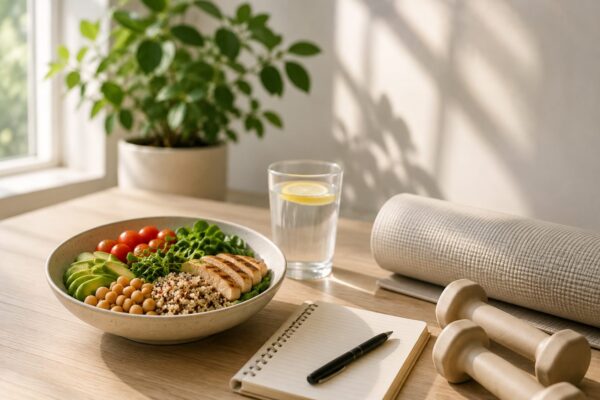
For many people, the path toward better health begins with surprisingly ordinary decisions repeated consistently. Cooking more meals at home instead of relying almost entirely on fast food. Replacing highly processed foods with meals built around protein, fiber, fruits, vegetables, and healthy fats. Walking after dinner. Strength training a few times each week. Sleeping enough to support recovery. Managing stress before it becomes emotional eating.
None of those habits are glamorous. None promise dramatic results within thirty days. None generate viral social media posts. But together, they work. They’re also the very things that improve health regardless of what the scale says. But, something important to note here that no one wants to talk about. If you make changes to your diet, mental load, and lifestyle, the number will move on the scale!
The challenge is that we live in a culture that has become deeply uncomfortable with delayed gratification. We want meaningful results, but we want them immediately. We want to feel better next week instead of six months from now. We want sustainable change without having to build sustainable habits.
It’s completely understandable why GLP-1 medications have become so appealing in that environment. A weekly injection feels far less overwhelming than completely restructuring how you eat, move, sleep, and care for yourself. Lasting behavior change is difficult. It requires patience, consistency, and the willingness to keep showing up even when progress feels slow.
Medication can absolutely make that journey easier for the right person. But I worry when it becomes the substitute for making the journey at all.
Perhaps what concerns me most is how casually these medications have become integrated into our culture. Every week it seems another clinic, wellness company, or online platform is advertising easier access to GLP-1 medications. They’re discussed almost as casually as supplements, despite being powerful prescription medications that significantly influence appetite, digestion, blood sugar regulation, and metabolism. My concern is that there also appears to be a growing trend toward convenience over careful assessment.
When powerful medications become easier to obtain than individualized nutrition counseling, strength training guidance, or meaningful conversations about behavior change, I think we should pause and ask ourselves whether we’ve unintentionally reversed the order of care. Lifestyle shouldn’t always be the last recommendation someone hears after they’ve already been handed a prescription. For many people, it should be where the conversation begins. That doesn’t mean lifestyle alone is the answer for everyone. It isn’t.
Our bodies are remarkably complex. They’re influenced by nutrition, sleep, movement, hormones, stress, medications, genetics, environment, and behavior. Reducing that complexity to a single prescription (or assuming every person struggling with their weight has the same underlying problem) doesn’t reflect the reality of human health. That’s why I believe education should always come first. But because education helps us understand whether medicine is needed, how to maximize its benefits if it is, and how to build a healthier life regardless of whether a prescription ever enters the picture.
Stay tuned for part 2 where I’ll cover the reality of the use of GLP-1 drugs.